Giveaways are popular because they are simple: someone gives, people participate, and a few or many recipients receive something. But in Nigeria, many giveaways still happen in ways that expose too much personal information. Everything here applies to any cash giveaway where winners claim for themselves.
You have probably seen posts like "Drop your account number in the comments," "Send your full name, bank, and phone number," "Screenshot your transfer and post it," or "Comment with your number to qualify." These methods may feel normal, but they can create privacy and safety problems. Phone numbers, account details, names, and screenshots can be copied, scraped, misused, or saved by strangers.
This guide explains how to run safer, more privacy-conscious giveaways without making the process difficult.
Why privacy matters in giveaways
A giveaway may feel casual, but personal data is still personal data. Nigeria now has a formal data protection framework under the Nigeria Data Protection Act, 2023. The Nigeria Data Protection Commission says the Act was signed into law on June 12, 2023 and established the Commission as the national data protection regulator.
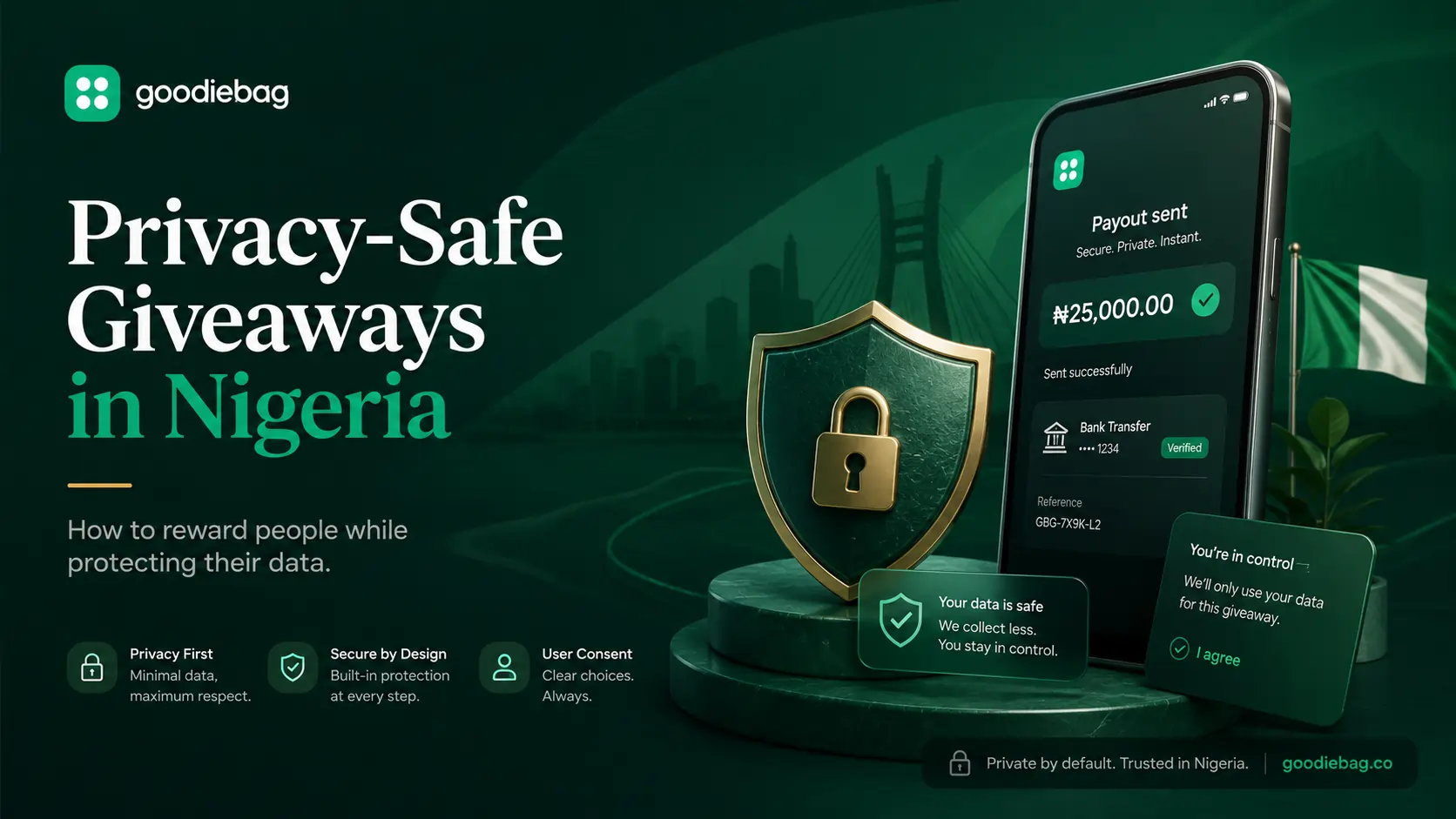
Even when a giveaway is small, the principle is simple: collect only what you need, use it only for the purpose you stated, and do not expose people unnecessarily.
Common privacy mistakes in Nigerian giveaways
1. Asking people to post account numbers publicly
This is one of the most common mistakes. A public comment section is not a safe place for account details. Even if the account number alone does not give someone full access to an account, it can still be combined with other information for impersonation, spam, or social engineering.
2. Collecting more information than needed
If you only need to send a cash gift, do you really need full address, date of birth, BVN, NIN, occupation, screenshots, or multiple phone numbers? Probably not.
3. Using screenshots as proof
Screenshots can expose names, bank details, balances, transaction references, and other information. If you must verify something, use a safer method that reveals less personal data.
4. Publishing recipient lists
Some creators publish names and account numbers to prove they paid people. This may create trust with the audience, but it can expose recipients. Better options include publishing a summary, blurring details, asking for consent, showing anonymized proof, or using a platform that tracks claims privately.
5. Leaving old forms open
If you use Google Forms or similar tools, close the form when the giveaway ends. Do not leave personal data collection forms open forever.
The safer giveaway principle: collect less, expose less
Collect only what is needed, show only what is necessary, and never ask people to pay to receive a gift.
That means do not ask for public account numbers, do not collect IDs unless required and legally appropriate, do not expose participant lists, use clear terms, explain who is eligible, keep claim instructions simple, and avoid "winner" language if the activity is a gift or appreciation drop.
Public Drop vs Guest List: privacy difference
If you use Goodiebag, one important privacy decision is whether to use Public Drop or Guest List. A Public Drop is easier to share widely. Anyone with the link and PIN can attempt to claim while slots remain. This is useful for open creator rewards, broad audience appreciation, and social media campaigns.
A Guest List is more controlled. Only approved phone numbers can claim. This is better for staff appreciation, private customer rewards, family gifts, closed communities, and situations where you know exactly who should receive the gift. If privacy matters more than reach, Guest List is usually safer.
Link and PIN: why separate sharing helps
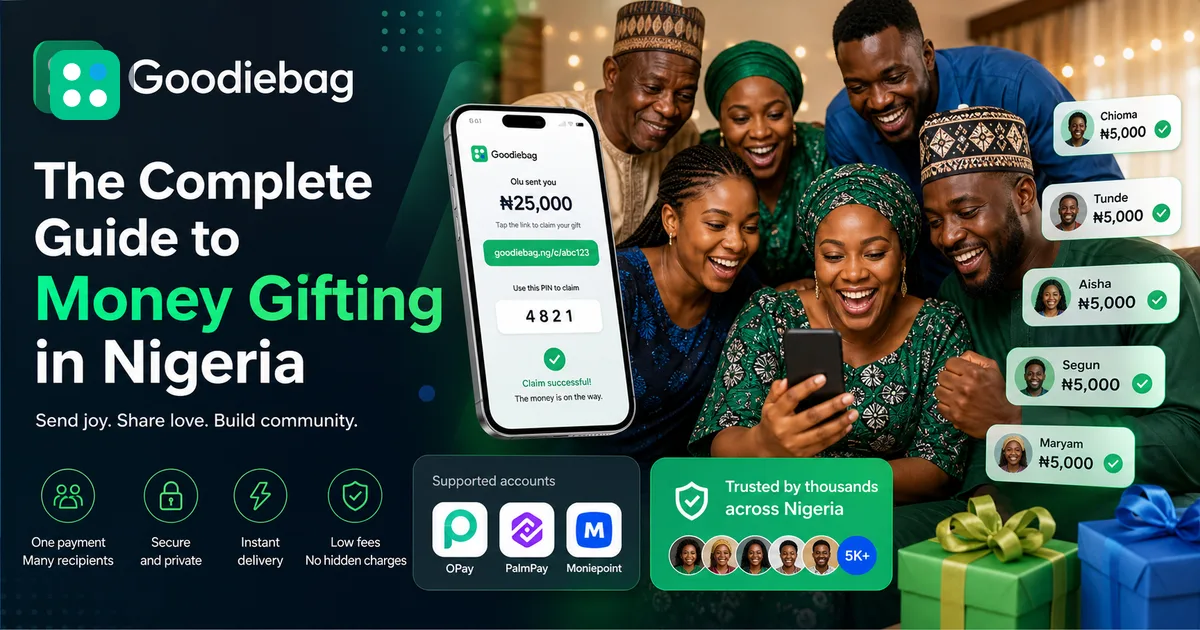
Goodiebag uses a claim link and PIN structure. A link gives people access to the claim page, while a PIN adds another layer of control. For safer sharing, share the link and PIN separately, send the PIN only to intended recipients, avoid posting the PIN publicly if the drop is meant for a closed group, and tell people not to forward the PIN without permission.
Read more: Why Goodiebag uses a link and PIN.
Privacy-safe giveaway checklist
Before you launch a giveaway, check these questions: What is the purpose of the giveaway? Who is eligible? What information do participants need to provide? Is every piece of information necessary? Will participant details be visible to others? How will recipients be selected or allowed to claim? What happens when the giveaway ends? How will unclaimed funds be handled? Will you delete or archive old participant data? Does the campaign avoid asking people to pay to claim?
Safer giveaway copy examples
For an open audience giveaway
Read Also
I am dropping a small Goodiebag for my community. Use the link and PIN to claim while slots remain. Please do not share personal details in the comments and do not pay anyone to claim.
For a private customer appreciation drop
We are sending a small thank-you Goodiebag to selected customers. The claim link and PIN will be shared privately. Please use only the official Goodiebag link.
For a staff appreciation drop
A small appreciation drop has been created for eligible team members. Claims are limited to approved recipients. Please do not forward the claim PIN.
What not to say
- "Drop account number in comments."
- "Post your phone number to qualify."
- "Pay registration fee to receive giveaway."
- "Send BVN/NIN for verification."
- "Everyone who comments will get paid."
- "Winners will be posted with full account details."
Where Goodiebag fits
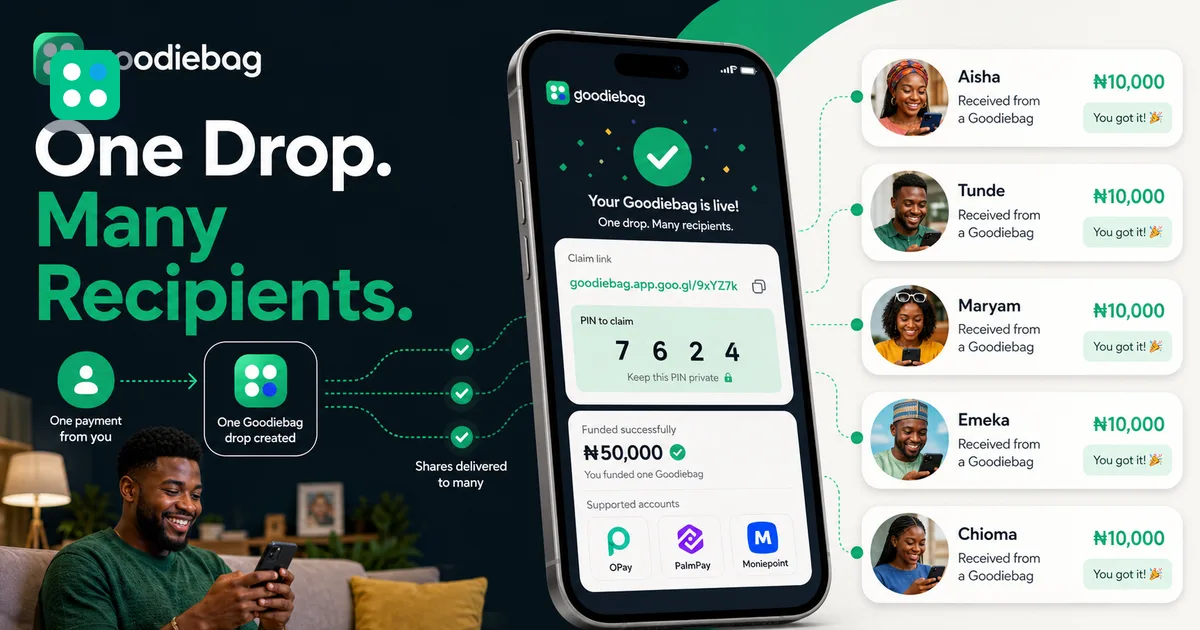
Goodiebag can help make giveaways cleaner by reducing the need to collect public account details. A sender creates a funded Goodiebag, shares a claim link and PIN, and recipients claim through supported phone-linked fintech accounts. Goodiebag is not a wallet, bank, savings product, betting product, or lottery system. It is a social gifting and digital rewards platform. Payments and payouts are processed through supported payment partners.
Start with Goodiebag's safety guide, review the privacy policy, and choose the claim mode that fits your audience.
Final thought
A good giveaway should make people feel appreciated, not exposed. The safest giveaway is not always the loudest one. Sometimes the better campaign is the one that collects less, protects participants better, and still creates a joyful moment.
Create your first Goodiebag
Create a money packet in under 2 minutes. One link. One PIN. Everybody paid.
Create a GoodiebagThis article is for general informational purposes only and does not constitute legal, financial, tax, business, investment, or regulatory advice. Results vary. Goodiebag does not guarantee income, engagement, claims, sales, follower growth, campaign performance, return on investment, or payout timing. For legal or data-protection obligations, consult a qualified professional.
Want to send your own? Head to Goodiebag and set one up in minutes.
Goodiebag Editorial Team
Goodiebag product and safety team
Guides by the Goodiebag team on social cash gifting, supported payouts, sender safety, and practical digital reward use cases in Nigeria.
Start your first Goodiebag today
Fund a drop, share a link and PIN, and let your audience claim while the moment is live. No Goodiebag account needed for recipients.
Create a Goodiebag