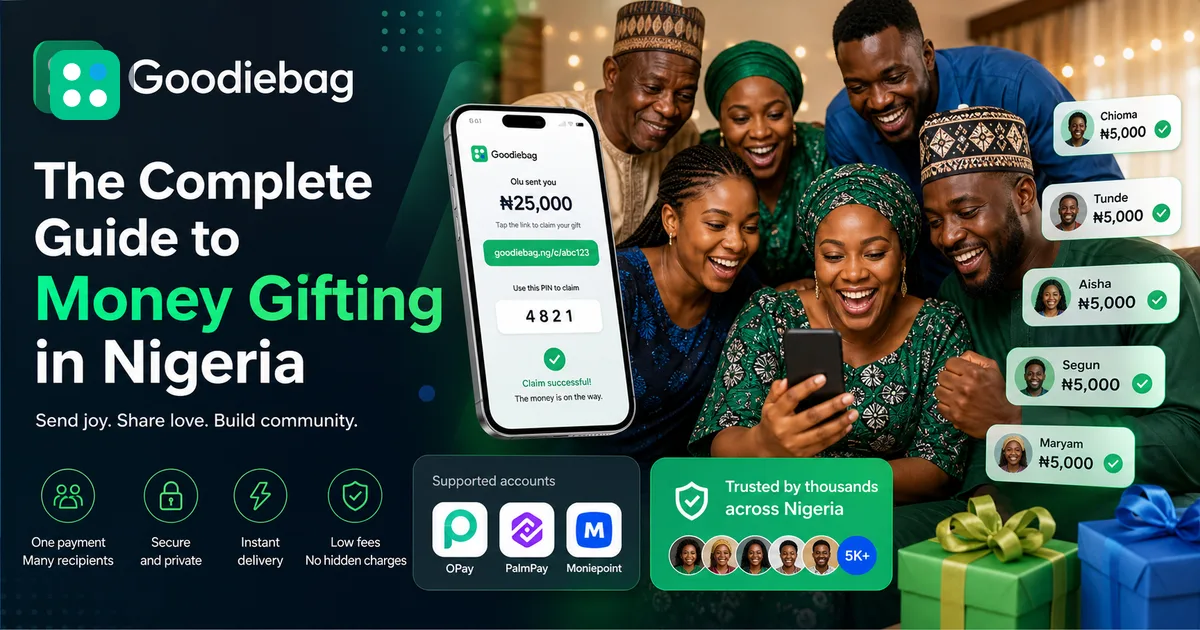
Money gifting in Nigeria carries meaning beyond the transfer itself. When you spray naira notes at a wedding, everyone sees the joy. When you send Sallah money to your nephew, you are keeping a family habit alive. When you drop a cash gift at a naming ceremony, you are joining a communal act that Nigerian families understand immediately. This guide covers money gifting culture in Nigeria, including etiquette, common amounts, and the rise of digital spraying. Jump straight to the occasion you need: birthday cash gifts, community cash gifts, or a pooled group money gift.
The Deep Roots of Money Gifting in Nigerian Culture
Money gifting in Nigeria predates paper currency. In Yoruba culture, the practice of giving gifts at rites of passage is called 'owo oriki' and was practised with cowry shells and trade goods long before colonialism. In Igbo culture, communal giving through systems like 'umuada' (women's associations) and 'otu ndi inyom' (women's societies) meant that no celebration happened without collective financial support. In Hausa culture, 'biki' celebrations are defined by communal money contributions that help families manage the cost of weddings, naming ceremonies, and funerals.
These traditions share one idea: money given at a celebration says something about the relationship. The amount, the way it is given, and who gives to whom are all noticed. That is why a plain bank transfer can feel flat. The money arrives, but the moment disappears.
Key Occasions for Money Gifting in Nigeria
- Weddings: The largest and most visible money gifting occasion. Spraying at the reception and envelope contributions are both expected.
- Naming ceremonies (Omo ijo / Aqiqah): Family and guests bring cash gifts for the new parents.
- Eid al-Fitr and Eid al-Adha (Sallah): Children and younger family members receive gifts from elders.
- Christmas and New Year: Extended family giving, staff appreciation, and community distributions.
- Birthdays: Especially milestone birthdays (40, 50, 60). Monetary gifts dominate over physical presents.
- Funerals and condolences: Contributions to help the bereaved family with expenses.
- Graduations: Cash gifts from parents, aunts, uncles, and family friends.
- Anniversaries: Corporate, church, and community anniversaries often feature giving moments.
- Children's Day: Employers, churches, and community organisations gift children.
Traditional vs Digital Money Gifting: What Has Changed
For most of Nigeria's history, money gifting was physical by necessity. You had to be in the room. You had to have the right denominations. You had to approach the right person at the right moment. The rise of mobile money apps starting around 2010 began changing this, but the shift accelerated dramatically after 2020, alongside Nigeria's wider move toward instant electronic payments. The combination of COVID-19 restrictions on large gatherings, the Naira scarcity episodes of 2022 and 2023, and the rapid growth of OPay, PalmPay, and Kuda created a population that was suddenly comfortable with digital money.
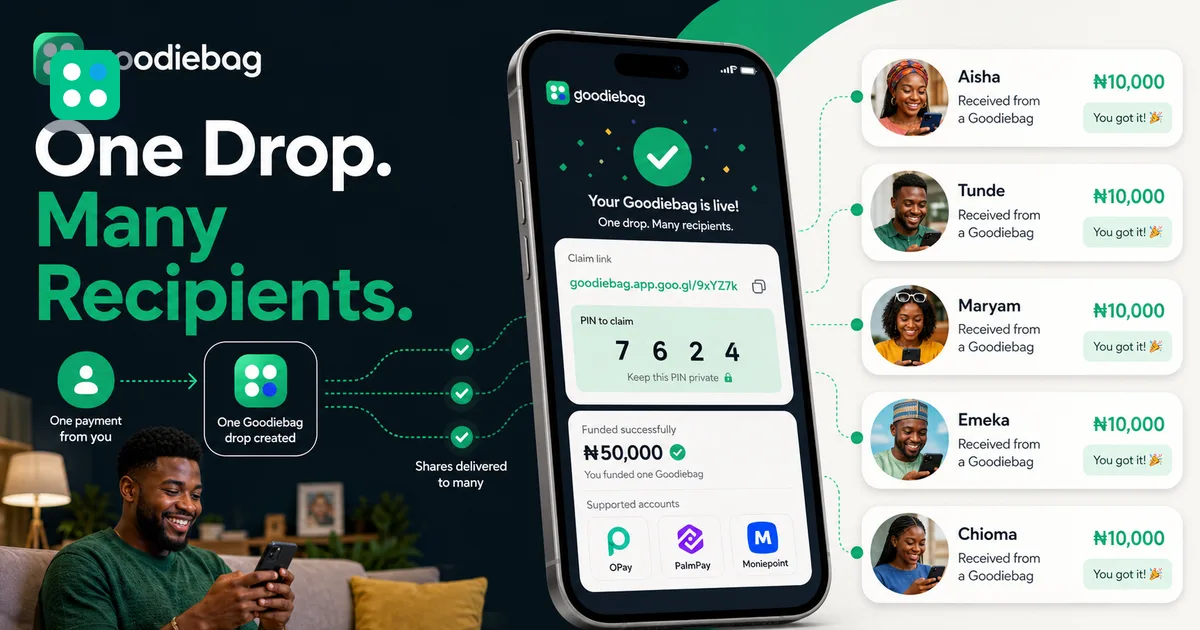
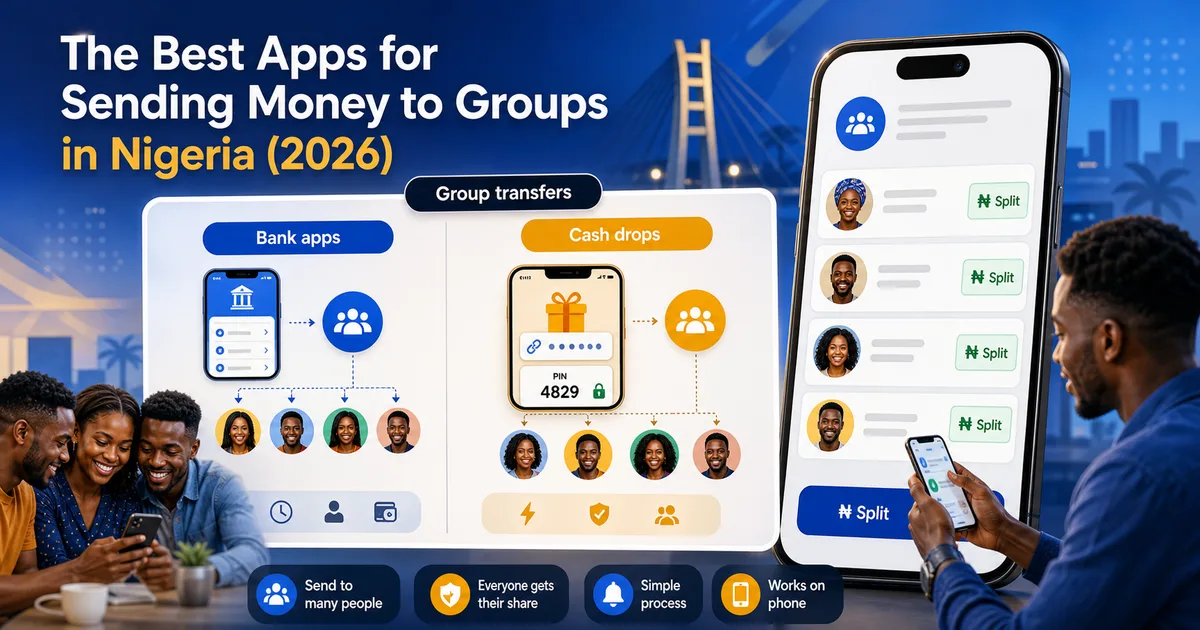
The challenge is that most digital money tools are designed for one-to-one transfers, not the one-to-many gifting that characterises Nigerian celebration culture. Sending owo-oriki to a bride via individual WhatsApp Pay transfers simply does not carry the same energy as the physical experience. This gap between tradition and available technology is exactly where tools like Goodiebag exist: creating a digital equivalent of the public, communal, participatory gifting experience.
Money Gifting Etiquette: What Every Nigerian Should Know
How Much to Give
This is the question every guest agonises over. The answer depends on your relationship to the celebrant, your financial position, and the scale of the event. A general guide from Nigerian social norms: for a close friend or sibling's wedding, ₦10,000 to ₦50,000 is the expected range in urban areas. For an acquaintance or colleague, ₦5,000 to ₦10,000 is typical. At naming ceremonies, ₦2,000 to ₦10,000 is standard. At funerals, contributions are more about solidarity than amount. For Sallah gifts to younger relatives, ₦500 to ₦5,000 is typical depending on your relationship and means.
The Rules of Spraying
Traditional spraying has its own protocol, and the Central Bank of Nigeria's banknote handling guidance is worth reading before planning any cash-heavy event. You do not spray at every moment of a wedding. You wait for the right song, the right entrance, the right emotional peak. You spray with clean notes when possible (Nigerians notice crumpled spraying). You spray generously near the couple, not in a corner. You do not spray and then pick the notes back up. Digital equivalents of spraying should try to capture this same energy: public, visible, generous, and timed to a moment.
Create your first Goodiebag
Create a money packet in under 2 minutes. One link. One PIN. Everybody paid.
Create a GoodiebagRead Also
The Problem With Physical Cash Gifting Today
The periodic Naira scarcity crises have highlighted a structural problem with cash-dependent gifting. During the 2022 and 2023 redesign crises, ATMs ran dry, banks were mobbed, and many Nigerians could not access physical notes. Events held during these periods saw drastically reduced spraying simply because people could not get clean notes. Beyond scarcity, physical cash also creates security risks at events, accountability gaps when money goes missing, and exclusion of guests who are attending remotely or sending their regards from abroad.
The Rise of Digital Money Gifting Tools
The smart solution for modern Nigerians is a hybrid approach. Physical gifting remains culturally important for in-person moments. But for the moments where physical cash is impractical, digital gifting tools fill the gap. A well-designed digital drop can actually increase participation by removing barriers. Someone who cannot attend a wedding in Lagos can still send a meaningful gift to the couple's Goodiebag link from Port Harcourt. A diaspora uncle can drop a generous amount for the naming ceremony he missed. The gift is public, the generosity is visible, and the money is sent through Paystack.
Key Takeaways
- Money gifting in Nigeria is cultural, relational, and communal. It is never just about the cash.
- Different occasions have different expected amounts and manners of giving.
- Digital tools are expanding access to gifting beyond physical presence.
- A good digital gifting experience preserves the public, participatory feeling of traditional giving.
- Platforms that enable group participation and fast delivery are replacing manual transfers.
- Some platforms reward the habit. On Goodiebag, sending, claiming, and referring others into the loop builds up points that can be redeemed for fee discounts and other perks.
This article is for general informational purposes only and does not constitute legal, financial, tax, business, investment, or regulatory advice. Results vary. Goodiebag does not guarantee income, engagement, claims, sales, follower growth, campaign performance, or payout timing.
Ready to try it yourself? Goodiebag turns any cash gift into one link and one PIN. When you are ready, create your own Goodiebag in under two minutes.
Goodiebag Editorial Team
Goodiebag product and safety team
Guides by the Goodiebag team on social cash gifting, supported payouts, sender safety, and practical digital reward use cases in Nigeria.
Start your first Goodiebag today
Fund a drop, share a link and PIN, and let your audience claim while the moment is live. No Goodiebag account needed for recipients.
Create a Goodiebag