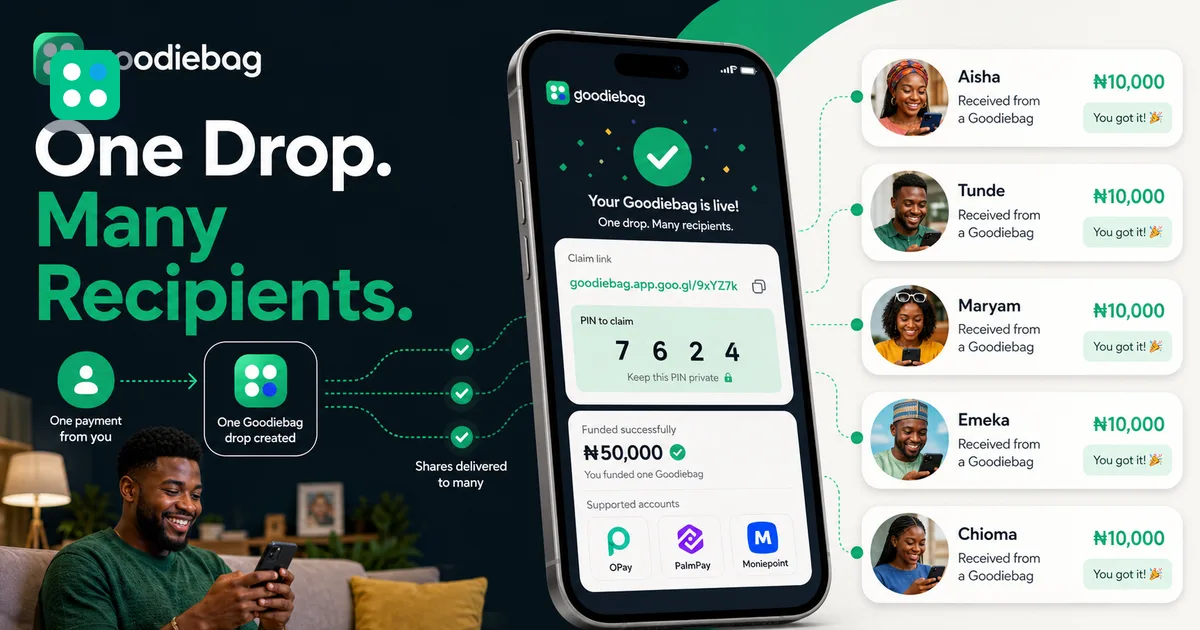
Artificial intelligence is not a futuristic concept for Nigerian fintech. It is working right now, behind almost every major financial transaction in the country. When you open your GTBank app and a chatbot helps you find your transaction history, that is AI. When OPay flags a suspicious transfer and texts you immediately, that is AI. When Carbon approves a loan in under five minutes without you providing collateral or paperwork, that is AI. When a Goodiebag sender drops money for twenty people and each claim goes through with the money routed to the right fintech bank account, that is AI too. The difference between AI in 2023 and AI in 2026 is that it has moved from being a competitive advantage for Nigerian fintechs to a basic expectation. Every major player uses it. The question is no longer whether AI belongs in money transfer but how much of the experience it should power.
How AI Detects Fraud in Nigerian Money Transfers
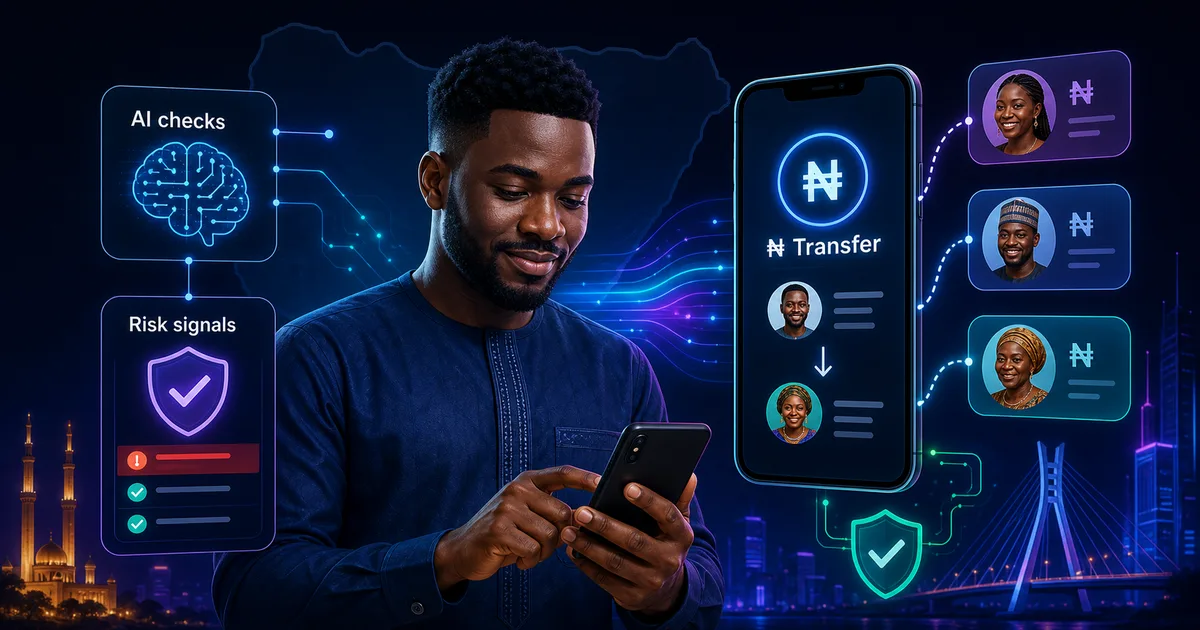
Nigeria's financial system processes billions of naira in digital transactions every day. The CBN notes that Nigeria's payment system has moved toward electronic channels. With that volume comes a growing problem: fraud. NIBSS reports rising incidents of unauthorised transfers, phishing-related payment fraud, and social engineering attacks targeting mobile banking users. Nigerian banks and fintechs have turned to AI as their primary defence.
AI fraud detection works by learning what normal behaviour looks like for each user and flagging deviations in real time. If you usually send between ₦2,000 and ₦10,000 per transaction and suddenly a ₦500,000 transfer is initiated from your account at 3am, an AI model recognises that pattern as anomalous and can block the transaction before it completes. OPay uses machine learning models that analyse hundreds of data points per transaction: location, device ID, transaction velocity, typical recipient history, and behavioural biometrics. The model decides in milliseconds whether the transaction is legitimate. These models improve over time. Every confirmed fraud case and every false positive teaches the system to be more accurate, which is why Nigerian fintech fraud rates have been declining even as transaction volumes have exploded.
How AI Powers Credit Scoring for Nigerians Without a Traditional Credit History
Traditional credit scoring relies on credit bureau data, which covers only a small fraction of Nigerians. The vast majority of the population has never taken a formal bank loan, which means they have no credit score at all. This has historically excluded most people from accessing formal credit. AI has changed this completely. Companies like Carbon, FairMoney, and Branch use alternative data sources and machine learning to build credit profiles for people who would be invisible to traditional credit bureaus.
These AI models analyse data points like SMS transaction history (with permission), airtime recharge patterns, mobile money usage, smartphone metadata, and even how users interact with the loan application itself. The model identifies patterns that correlate with creditworthiness without needing a traditional credit history. The result is that Carbon can approve a loan in under five minutes for someone who has never had a formal bank account. FairMoney serves customers across Nigeria who would have been rejected by every traditional bank. The implications for money gifting are significant: when more Nigerians have access to formal credit, they have more liquidity to participate in giving, to send money for a family event, to contribute to a group gift, or to create a Goodiebag for their community.
How AI Chatbots Changed Nigerian Banking
The most visible use of AI in Nigerian banking is probably the chatbot. GTBank's Leo was one of the first and most successful banking chatbots in Africa. Launched in 2018 on Facebook Messenger, Leo allowed customers to check balances, view transaction history, buy airtime, and pay bills through natural conversation. You did not need to navigate an app or remember USSD codes. You just typed 'What is my balance?' and Leo answered. Since then, every major Nigerian bank has introduced its own AI assistant. Access Bank has Ada. FirstBank has YouFirst. UBA has Leo too. These chatbots have evolved from simple FAQ responders to systems that handle complex transactions, support USSD fallback for feature phones, and operate across WhatsApp, messaging apps, and the bank's own mobile app.
For money gifting, chatbots play a supporting but significant role. When a family member receives a Goodiebag link in their WhatsApp group and does not understand how to claim, they can ask their bank's chatbot for help. The chatbot explains the process, confirms the transaction status, and guides them through the steps. This lowers the barrier for less digitally confident users to participate in digital gifting. As Nigerian language models improve (Google's work on Yoruba, Hausa, and Igbo language AI is a key enabler), these chatbots will increasingly serve users in their preferred local language rather than English.
How AI Enables Fast Payment Routing and Settlement
When you send money from a GTBank account to an OPay user, the money travels through NIBSS (the Nigeria Inter-Bank Settlement System), which handles interbank clearing and settlement. In the past, this process could take hours or even days, especially outside business hours. Today, AI-powered routing engines determine the most efficient path for each transaction in milliseconds. These systems analyse real-time network conditions across all Nigerian payment channels: NIBSS Instant Payment (NIP), mobile money switches, USSD gateways, and fintech internal ledgers. The system chooses the channel with the lowest latency and the highest reliability for each specific transaction.
If NIBSS is experiencing high volume, the AI routes through a mobile money switch instead. If the fintech-to-fintech corridor is faster (OPay to PalmPay, for example), the AI uses that path. This happens in real time across hundreds of thousands of transactions per hour without human intervention. For Goodiebag specifically, AI routing is what makes the pass-through model work. When a claim comes in and the system needs to send money to the claimant's OPay account, the transfer engine resolves the bank code, verifies the account exists, and initiates the Paystack transfer. AI models help optimise this flow by predicting the fastest transfer corridor, managing retry logic for transient failures, and detecting patterns that suggest a transfer might fail before it is sent. The result is that claims are processed subject to verification, bank availability, and payment partner processing.
Create your first Goodiebag
Create a money packet in under 2 minutes. One link. One PIN. Everybody paid.
Create a GoodiebagHow AI Makes Pass-Through Payment Architectures Like Goodiebag's Possible
The pass-through architecture used by Goodiebag is an example of a payment model that would not be practical at scale without AI. Goodiebag does not operate customer wallets or stored-value accounts. Successful claims are processed from the funded Goodiebag through Paystack and supported payment partners to the recipient's supported bank account. This reduces wallet-style custody complexity, removes fraud risk from stored user balances, and keeps recipients from needing a withdrawal step. But making this work in real time, across multiple banks and fintech platforms, with millions of naira moving every day, requires AI.
AI enables this model in several specific ways. First, AI-powered recipient account resolution: when a claimant enters their phone number, the system needs to determine which bank (OPay, PalmPay, or Moniepoint) the number belongs to and resolve the correct recipient code. AI models trained on transaction patterns can predict the correct bank with high accuracy and flag ambiguous numbers for manual review. Second, AI-driven transfer routing: the transfer engine must decide which payment corridor to use for each transfer based on real-time network conditions, historical success rates, and the specific characteristics of the destination bank. Third, AI-based failure prediction: machine learning models can predict which transfers are likely to fail based on patterns in the data (time of day, bank type, amount, historical success rates) and trigger preventive actions like switching to a backup transfer corridor or notifying the operations team before the failure occurs.
The result is a payment system where transfers are processed efficiently, failures are detected and retried automatically, and the entire infrastructure runs without manual intervention for most claims. This invisible AI layer is what makes pass-through gifting work at scale in the Nigerian market.
What Does the Future Hold for AI in Nigerian Money Transfers?
Read Also
AI-Powered Personal Finance Agents
The next step is AI that helps people plan money instead of only moving it. Imagine a tool that notices your December spending pattern, reminds you about Sallah gifts, or helps you prepare for ajo contributions before the deadline arrives. Nigerian money habits have their own rhythm: school fees, Ramadan giving, village trips, family events, and remittances from relatives abroad. Useful AI will need to understand those rhythms instead of treating every user like a generic spreadsheet.
Voice-Activated Payments in Nigerian Languages
Voice-based AI is advancing rapidly, and Nigerian fintechs are beginning to explore payments via voice commands in local languages. Imagine telling your banking app in Yoruba, Pidgin, or Hausa: 'Send ₦5,000 to my sister's Goodiebag.' The AI processes the natural language, confirms the recipient, validates the amount, and initiates the transfer. For Nigeria's large population of users who prefer voice interaction over text, this could be the next major leap in financial inclusion. Google's recent work on African language models (covering Yoruba, Hausa, and Igbo) combined with open banking APIs through NIBSS makes this scenario increasingly realistic within the next two to three years.
AI-Driven Hyper-Personalised Giving
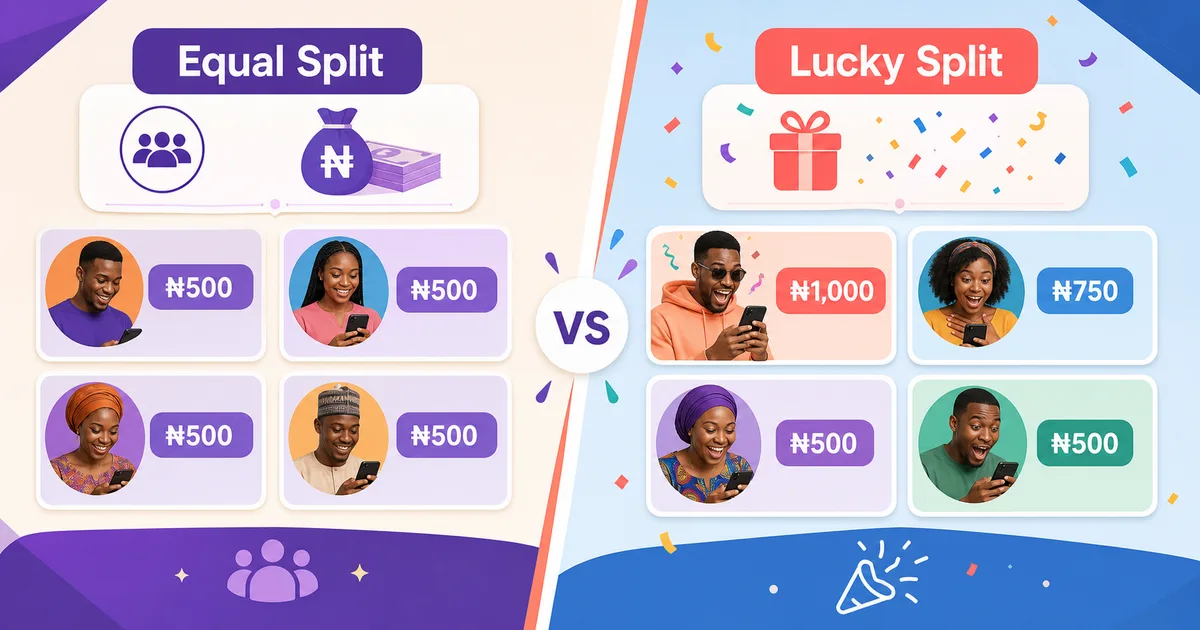
As AI models become more sophisticated, they will learn each user's giving patterns and preferences. An AI might notice that you always send money to fifteen cousins at Sallah and suggest setting up a recurring Goodiebag for next year. It might recognise that you increase your gifting in December and proactively nudge you to budget for it in November. It might learn which splits (Lucky or Equal) your recipients respond to best and recommend the right format for each occasion. The best AI in fintech will not be the one that makes the flashiest predictions. It will be the one that understands the rhythms of your life well enough to anticipate what you need before you ask.
The Bottom Line
AI is not a separate feature that Nigerian fintech companies add to their products. It is the infrastructure layer that makes modern money transfer possible. Fraud detection, credit scoring, chatbot customer service, payment routing, account resolution, and pass-through architectures: all of these rely on machine learning models that process billions of data points every day. The next time you send money, claim a gift, or check your balance, an AI model probably helped make it happen. The next few years will deepen this integration as AI moves from handling individual tasks to orchestrating entire financial experiences for Nigerian users. The platforms that embrace this shift early will be the ones that define how Nigerians send, receive, and gift money for the next decade.
Ready to try it yourself? Goodiebag turns any cash gift into one link and one PIN. When you are ready, create your own Goodiebag in under two minutes.
Goodiebag Editorial Team
Goodiebag product and safety team
Guides by the Goodiebag team on social cash gifting, supported payouts, sender safety, and practical digital reward use cases in Nigeria.
Start your first Goodiebag today
Fund a drop, share a link and PIN, and let your audience claim while the moment is live. No Goodiebag account needed for recipients.
Create a Goodiebag